What Does Niacinamide Do for Your Hair? The Scalp-Health Ingredient You're Overlooking
DISCLAIMER: This article is for educational purposes only and does not constitute medical advice. For questions about specific health conditions, allergies, or use during pregnancy or breastfeeding, please consult a qualified healthcare provider.
If you've spent any time researching skincare over the last few years, you've encountered niacinamide, likely in the context of minimizing pores, fading dark spots, or regulating oily skin. It's one of the most versatile and well-studied ingredients in the modern skincare toolkit. What's talked about far less is what it does when it's applied to the scalp. For travelers navigating humid, hot climates where excess oil and scalp imbalance are the primary complaints, niacinamide in haircare is a meaningful upgrade worth understanding.
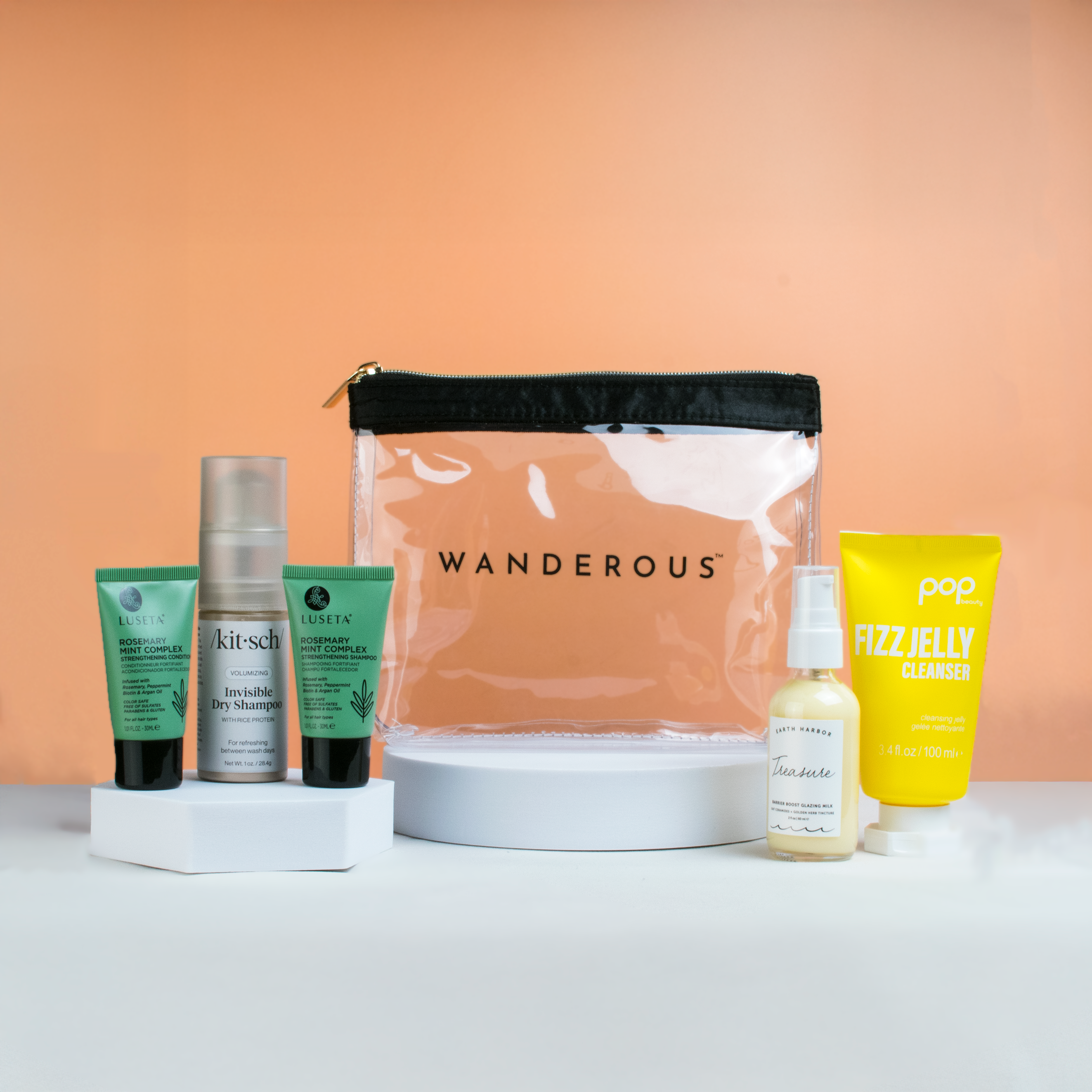
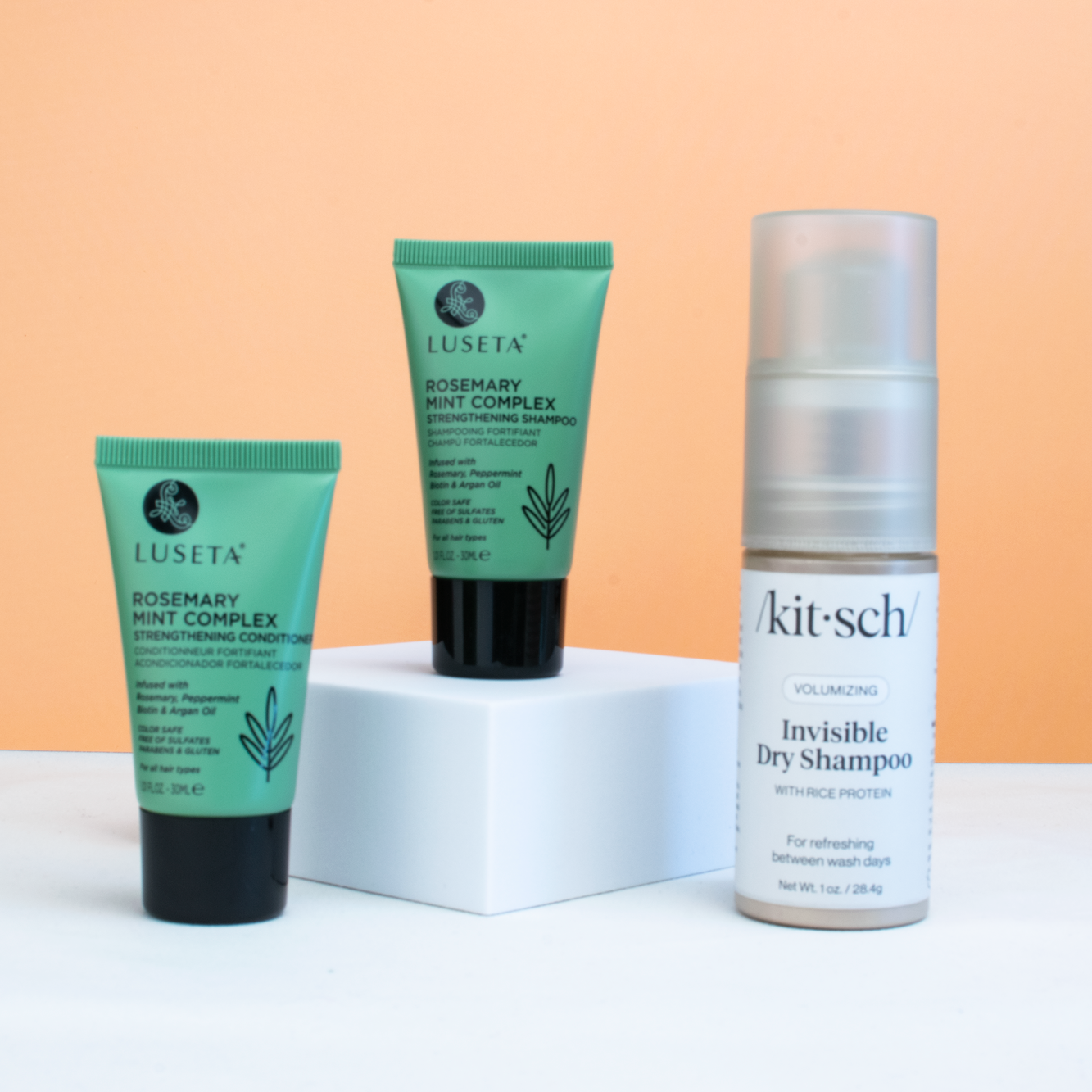
The Kitsch Volumizing Rice Protein Dry Shampoo in the Wanderous REFRESH bundle is one of the few products in its category formulated with niacinamide. That's not an accident: it's a deliberate pairing of scalp health support with the volume-lifting function that dry shampoo is actually known for.
What Is Niacinamide?
Niacinamide is a form of Vitamin B3 (niacin), specifically the amide version, which is water-soluble, stable across a wide pH range, and compatible with most other skincare and haircare ingredients. Unlike niacin itself, niacinamide does not cause the "niacin flush" (skin redness and tingling) associated with high oral doses of B3, making it well-suited for topical use on sensitive skin and the scalp.
It's found naturally in many foods (eggs, fish, meat, legumes, and whole grains are all meaningful dietary sources) and is also produced endogenously in small amounts from dietary tryptophan. In cosmetic formulations, niacinamide is synthesized for consistency and stability.
What Does Niacinamide Do for Skin?
This is where niacinamide has built its reputation, and for good reason. Its documented effects on skin include:
Barrier strengthening
Niacinamide increases the synthesis of ceramides, fatty acids, and other lipids that make up the skin's natural moisture barrier. A stronger barrier means less transepidermal water loss, better moisture retention, and more resilience against environmental stressors.
Sebum regulation
It has been shown to reduce sebum excretion rates, which translates to less visible shine, smaller-appearing pores, and reduced likelihood of congestion or breakouts in oil-prone skin.
Anti-inflammatory effect
Niacinamide reduces the production of pro-inflammatory cytokines, making it useful for calming redness and managing conditions like acne, rosacea, and general sensitivity.
Antioxidant activity
As a precursor to NAD+ (a coenzyme central to cellular energy production), niacinamide supports cellular repair processes and protects against oxidative damage.
Pigmentation
It inhibits the transfer of melanin to skin cells, which over time can reduce the appearance of dark spots, uneven tone, and post-inflammatory hyperpigmentation.
This breadth of function is unusual for a single ingredient, and it explains why niacinamide has become such a staple across skincare categories — from cleansers to serums to moisturizers.
Is Niacinamide Safe? Can I Use It Every Day?
Niacinamide is generally considered safe and well-tolerated in most cases for daily topical use. It does not require a prescription, works at a wide range of concentrations (2–10% are most common in cosmetic products, with 5% being the most studied), and is compatible with most other actives including retinoids, vitamin C, AHAs, and BHAs.
One caveat worth knowing: very high concentrations (above 10%) can occasionally cause mild skin flushing or irritation in sensitive individuals. This is uncommon with standard cosmetic formulations and not typically a concern with haircare products or scalp applications. If you notice redness or tingling on the scalp after use, reduce frequency or switch to a product with a lower concentration.
What Does Niacinamide Do for Your Hair?
The scalp is skin — and the same mechanisms that make niacinamide effective on facial skin apply to scalp health as well.
Sebum regulation on the scalp
The scalp has a high density of sebaceous glands and, in hot or humid conditions, can produce excess oil rapidly. Niacinamide's sebum-regulating properties help moderate this, extending the time between necessary washes and reducing the heavy, flat feeling at the roots that humid-climate travelers know well.
Scalp barrier support
A healthy scalp barrier is more resistant to microbial imbalance, irritation, and environmental disruption. Niacinamide supports the lipid components of the scalp skin barrier, the same way it does on the face.
Antimicrobial properties
Research has demonstrated niacinamide's antimicrobial activity against a range of bacteria. On the scalp, this is relevant for maintaining a balanced environment where beneficial microorganisms can thrive without being overwhelmed by problematic ones.
What makes niacinamide's presence in a dry shampoo notable is that dry shampoos are typically formulated purely for oil absorption and aesthetics. Adding a scalp-active ingredient like niacinamide turns a cosmetic fix into something more functional — addressing the environment that's creating the problem, not just masking its visible effects.
Can Niacinamide Remove Dandruff?
Niacinamide's antimicrobial properties do support a healthier scalp environment, which may be beneficial for some types of scalp imbalance. However, it is not a primary or established dandruff treatment.
Dandruff is typically associated with an overgrowth of Malassezia yeast on the scalp, and clinical dandruff treatments generally involve antifungal agents (like zinc pyrithione, ketoconazole, or selenium sulfide) specifically targeted at yeast. Niacinamide may contribute to a healthier scalp context, but it is not a substitute for these targeted treatments.
If you experience persistent dandruff — particularly flaking accompanied by significant itching, redness, or scaling — it's worth having it evaluated by a dermatologist, as these can be symptoms of seborrheic dermatitis or other scalp conditions that benefit from targeted clinical care.
Niacinamide and Travel: The Humid Climate Case
Niacinamide's value profile makes it particularly relevant for travelers heading to humid, hot destinations — tropical regions, coastal summer climates, rainy-season destinations in Asia and Latin America.
In humid heat, the scalp produces more oil more quickly. Sweat mixes with sebum and creates an environment on the scalp that can feel perpetually unwashed. The impulse is to wash more frequently, but over-washing can strip the scalp's barrier and trigger even more oil production as the scalp compensates. Niacinamide offers an alternative intervention: support the scalp's own regulatory mechanisms so it doesn't go into overdrive in the first place.
On the skin side, niacinamide's sebum regulation is similarly valuable in humid climates, where shine and congestion tend to be bigger concerns than dryness. Its barrier-strengthening properties are also helpful when tropical humidity causes the skin to fluctuate rapidly between feeling dewy and feeling overwhelmed.
Is It Safe During Pregnancy or While Breastfeeding?
Topical niacinamide is generally considered safe for use during pregnancy and breastfeeding at standard cosmetic concentrations, as it is well-tolerated and minimally absorbed systemically. However, please consult your OB-GYN or healthcare provider before adding new products to your routine during pregnancy or while breastfeeding.
Is It Safe for People with Skin Allergies?
Niacinamide is among the better-tolerated skincare ingredients and is generally not a common allergen. Contact allergy to niacinamide itself is rare. That said, products containing niacinamide may include other ingredients — preservatives, fragrance, botanical extracts — that could be sensitizing in individuals with known allergies or contact dermatitis. Patch testing is recommended for anyone with a history of ingredient sensitivities. Consult your allergist or dermatologist for personalized guidance.
Niacinamide in the Wanderous Lineup
Within the Wanderous lineup, niacinamide appears in the REFRESH bundle via the Kitsch Volumizing Rice Protein Dry Shampoo — and its presence there is worth highlighting precisely because it's unusual.
Most dry shampoos are pure oil-absorption products: starches or powders that mattify the scalp and provide a temporary lift at the roots. The Kitsch formula pairs niacinamide with rice protein, creating a product that addresses both the visible problem (limp, oily roots) and the underlying scalp environment contributing to it. Rice protein adds structural lift to the hair shaft, while niacinamide works at the scalp level to support oil regulation and microbial balance.
The REFRESH bundle is designed for humid climates — the conditions where the scalp and skin work hardest to stay balanced. Niacinamide in a dry shampoo format isn't just a formulation choice; it's a considered answer to the specific challenge that humid-climate travel creates for scalp health.